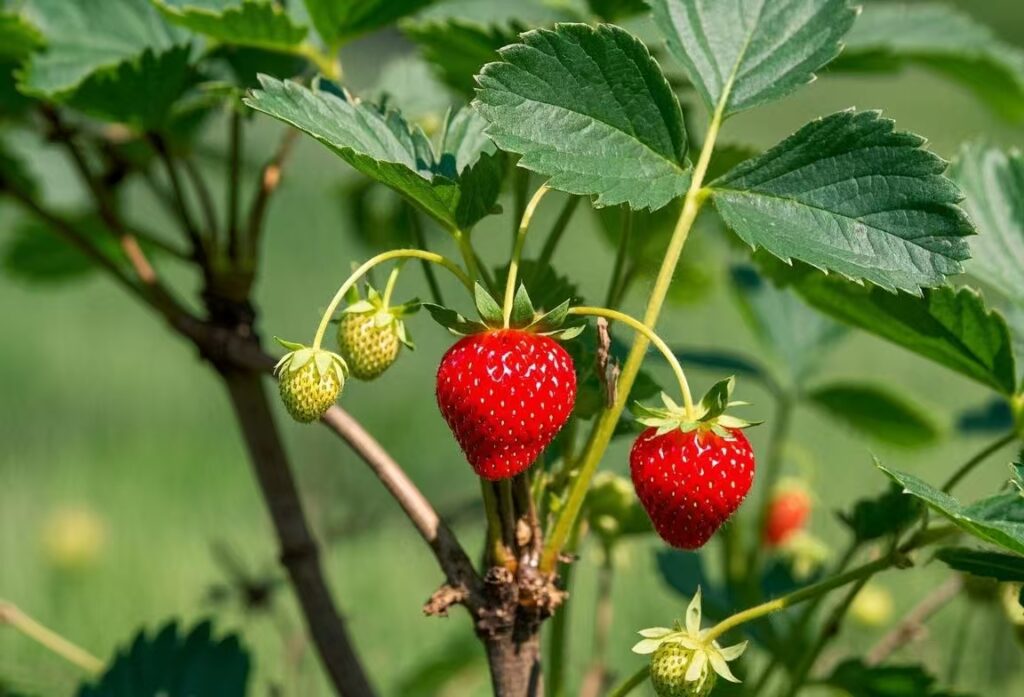
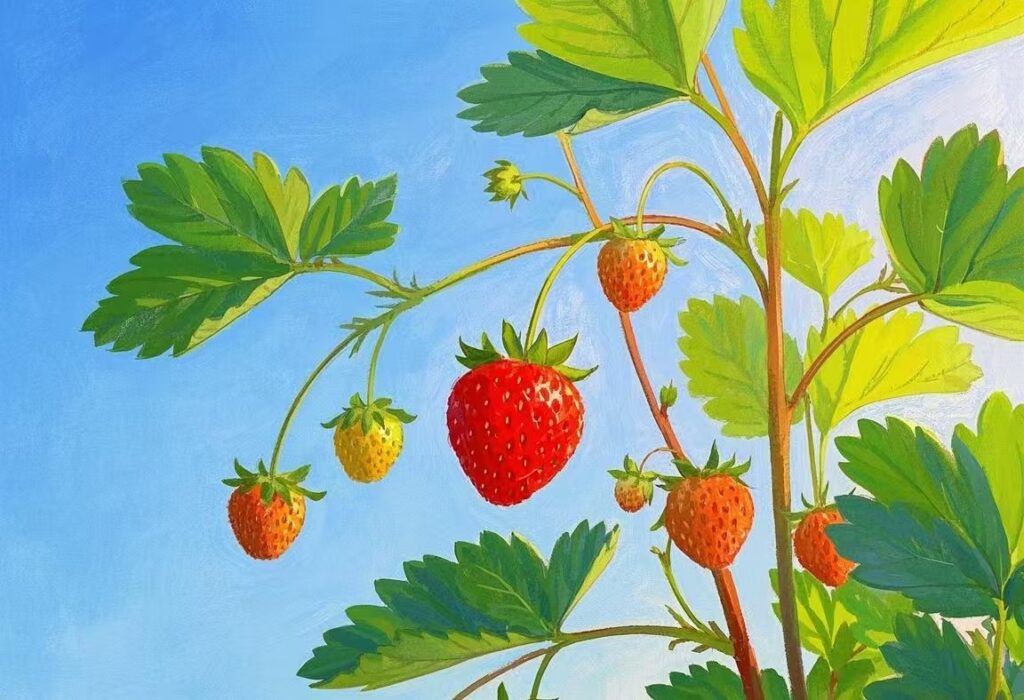
When you hear “strawberry bush,” you might imagine a plant laden with juicy red berries—but the Strawberry Bush (Euonymus americanus), also known as “Hearts-a-Burstin’,” is a fascinating native shrub with its own unique charm. Whether you’re a gardener, nature lover, or just curious about unusual plants, here’s why this bush deserves a spot in your landscape.
What is a Strawberry Bush?
🌿 Native Range: Eastern United States (woodlands, moist slopes).
🍓 Not Edible: Despite its name, its berries are toxic to humans (but loved by birds!).
💥 Showstopper Fruit: Bright red seed capsules that split open in fall, revealing orange seeds—hence the nickname “Hearts-a-Burstin’.”
Why Grow a Strawberry Bush?
1. Year-Round Visual Interest
- Spring: Delicate greenish-white flowers.
- Summer: Lush green foliage.
- Fall: Pinkish-red pods burst open, revealing vibrant seeds.
- Winter: Naked stems with lingering seed capsules add texture.
2. Wildlife Friendly
- Birds (like turkeys and quail) eat the seeds.
- Deer typically avoid it—great for low-maintenance gardens!
3. Shade Tolerant
Thrives in partial to full shade, making it perfect for woodland gardens or under trees.
4. Drought Resistant Once Established
Ideal for eco-friendly landscapes.
How to Grow and Care for Strawberry Bush
- Soil: Prefers moist, well-drained, acidic soil.
- Light: Partial shade (morning sun + afternoon shade is ideal).
- Watering: Keep soil moist until established; then drought-tolerant.
- Pruning: Minimal—just remove dead branches in late winter.
Landscaping Ideas
- Woodland Gardens: Pair with ferns, hostas, and wild ginger.
- Naturalized Areas: Let it spread for a wild, rustic look.
- Erosion Control: Plant on slopes to stabilize soil.
Caution: Not for Edible Gardens!
🚫 Toxic berries—keep away from kids and pets.
✅ Bird-safe: A great way to support local wildlife.
Where to Buy
- Native plant nurseries (look for Euonymus americanus).
- Online retailers (Prairie Moon Nursery, Native Forest Nursery).
Final Thoughts
The Strawberry Bush is a low-maintenance, eye-catching native shrub that supports biodiversity while adding four-season beauty. Though it won’t give you strawberries, its fall spectacle is even more thrilling!