Bonsai, the ancient art of cultivating miniature trees, has captivated people around the world for centuries. Among the many styles and varieties of bonsai, the Golden Gate bonsai stands out for its unique beauty and cultural significance. But where do Golden Gate bonsais originate from, and what makes them so special? In this blog, we’ll explore the origins, characteristics, and care of these stunning miniature trees.
What is a Golden Gate Bonsai?
The Golden Gate bonsai is a specific style of bonsai that features the Ficus microcarpa, commonly known as the Golden Gate ficus or Chinese banyan. This variety is prized for its small, glossy leaves, aerial roots, and ability to thrive indoors. Its name, “Golden Gate,” is believed to be inspired by the iconic Golden Gate Bridge in San Francisco, symbolizing strength and elegance.
Origins of the Golden Gate Bonsai
The Golden Gate bonsai traces its roots to Southeast Asia, particularly China and Taiwan, where the Ficus microcarpa is native. This tree species has been used in bonsai cultivation for centuries due to its adaptability and resilience.
- China: Bonsai, known as penjing in Chinese, has a long history in China, dating back over a thousand years. The Golden Gate ficus was often used in penjing due to its ability to grow in various conditions and its striking appearance.
- Taiwan: The art of bonsai was further refined in Taiwan, where the Golden Gate ficus became a popular choice for its aesthetic appeal and ease of care.
From Asia, the Golden Gate bonsai gained popularity worldwide, especially in the United States, where it became a favorite among bonsai enthusiasts.
Why is the Golden Gate Bonsai So Popular?
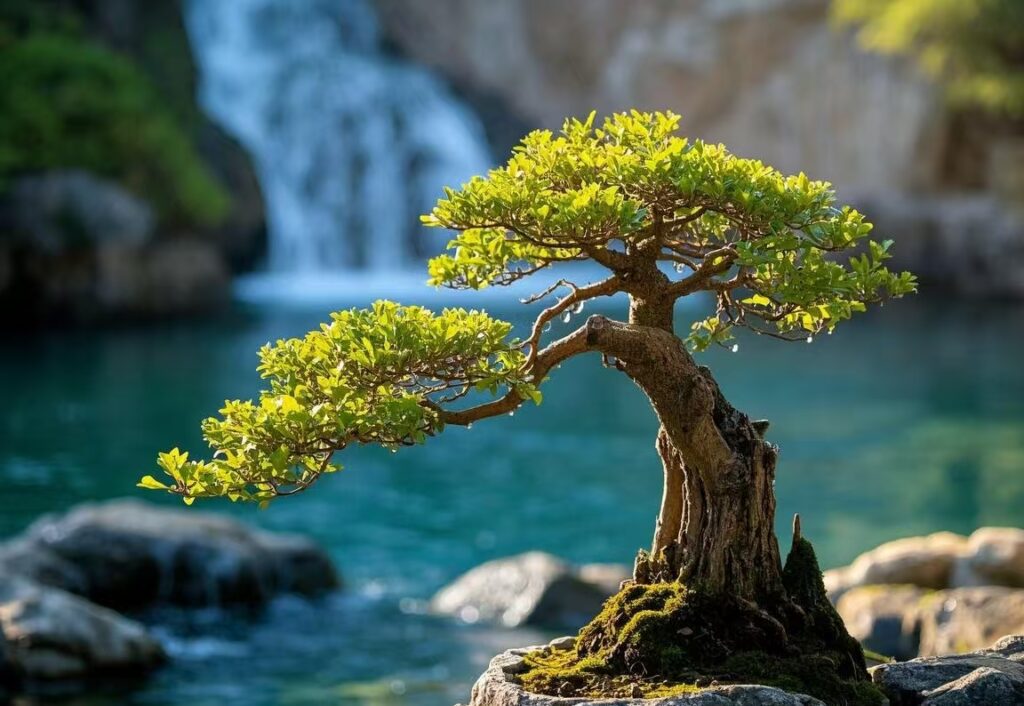
- Indoor Adaptability: Unlike many bonsai trees that require outdoor conditions, the Golden Gate bonsai thrives indoors, making it ideal for urban dwellers.
- Low Maintenance: It’s forgiving and can tolerate a range of light and humidity levels, perfect for beginners.
- Aesthetic Appeal: Its small leaves, intricate aerial roots, and graceful trunk make it a visually stunning addition to any space.
- Symbolism: The Golden Gate bonsai represents strength, resilience, and harmony, reflecting the balance of nature.
How to Care for a Golden Gate Bonsai
Caring for a Golden Gate bonsai is relatively simple, but it requires attention to detail. Here are some essential tips:
1. Light
- Place your Golden Gate bonsai in bright, indirect light. It can tolerate lower light conditions but thrives with ample sunlight.
2. Watering
- Water the bonsai when the top inch of soil feels dry. Avoid overwatering, as this can lead to root rot.
3. Humidity
- The Golden Gate bonsai prefers moderate humidity. Mist the leaves regularly or use a humidity tray to maintain moisture levels.
4. Pruning and Shaping
- Regular pruning is essential to maintain the bonsai’s shape and encourage new growth. Use sharp scissors to trim leaves and branches.
5. Repotting
- Repot your Golden Gate bonsai every 2-3 years to refresh the soil and promote healthy root growth.
6. Fertilizing
- Feed your bonsai with a balanced fertilizer during the growing season (spring and summer) to support its growth.
Symbolism and Cultural Significance
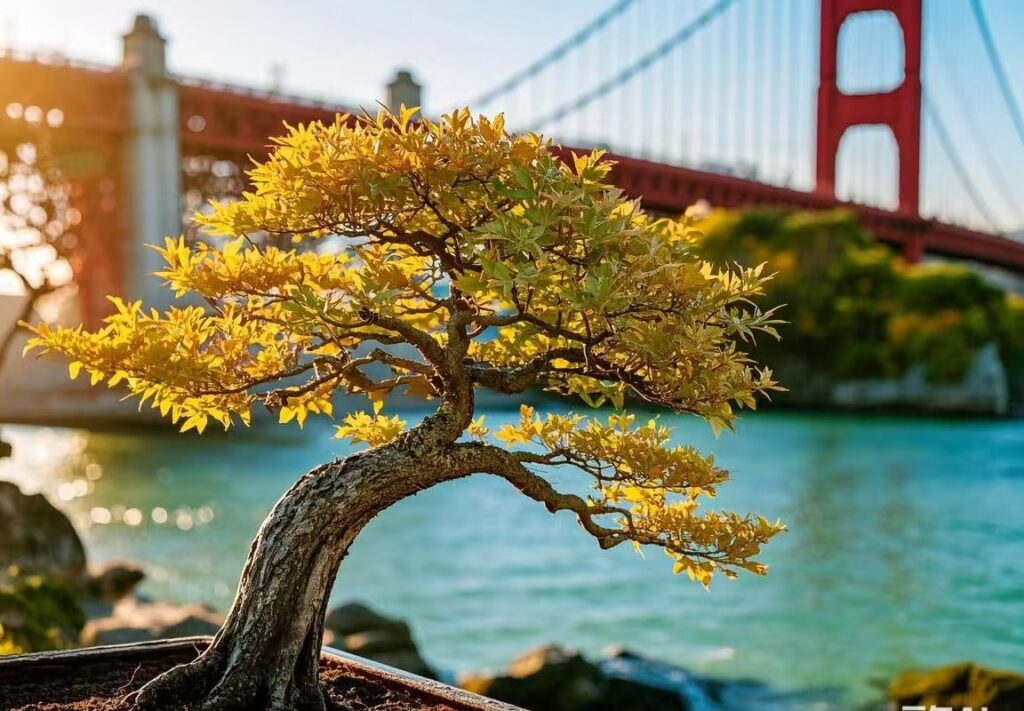
The Golden Gate bonsai is more than just a decorative plant—it’s a symbol of patience, perseverance, and the beauty of nature. In Chinese culture, bonsai represents harmony between humans and the natural world, while in Western cultures, it’s often seen as a symbol of tranquility and mindfulness.
Conclusion
The Golden Gate bonsai is a testament to the timeless art of bonsai, blending history, culture, and nature into a single, captivating creation. Originating from the lush landscapes of Southeast Asia, this miniature tree has found its way into homes and hearts around the world. Whether you’re a seasoned bonsai artist or a beginner, the Golden Gate bonsai offers a rewarding and meditative experience.
Do you have a Golden Gate bonsai? Share your experiences and tips in the comments below!