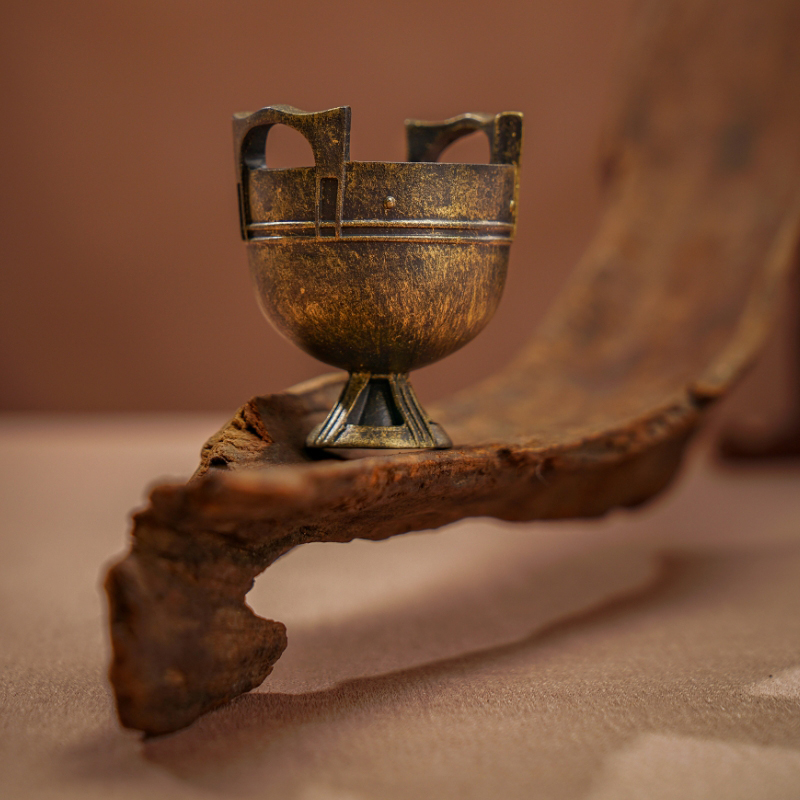
Uranium glass, with its mesmerizing green glow under UV light, is a favorite among collectors and glass enthusiasts. But did you know that there are several other types of specialty glass that are just as fascinating? From historic formulas to modern innovations, here’s a look at some of the most intriguing glass types beyond uranium glass.
1. Cobalt Blue Glass
What makes it special?
Cobalt blue glass gets its deep, vibrant blue hue from the addition of cobalt oxide. Used for centuries in decorative glassware, bottles, and stained glass windows, it is highly sought after for its striking color.
Where is it found?
- Antique medicine and poison bottles
- Depression-era glassware
- Modern art glass pieces
2. Vaseline Glass
What makes it special?
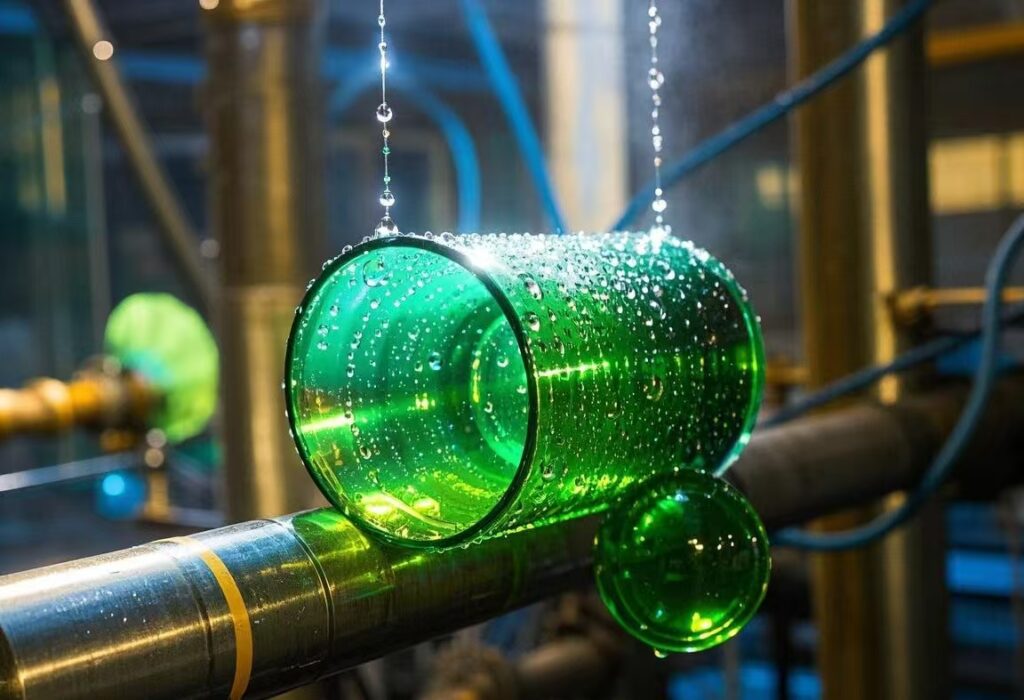
Often confused with uranium glass, Vaseline glass contains only small traces of uranium, giving it a softer yellow-green hue. It also glows under UV light, but not as intensely as uranium glass.
Where is it found?
- Victorian-era glassware
- Depression glass
- Antique perfume bottles
3. Ruby Glass (Gold Glass)
What makes it special?
Ruby glass gets its rich red color from gold chloride, making it one of the most valuable types of colored glass. The deep, jewel-like tones make it a favorite for decorative and luxury glassware.
Where is it found?
- Antique goblets and stemware
- Stained glass windows
- High-end collectible glass
4. Selenium Glass (Amberina & Red Glass)
What makes it special?
By adding selenium or cadmium to the mix, glassmakers can create beautiful shades of orange, red, and amber. Amberina glass, which fades from red to yellow, is a famous example.
Where is it found?
- Art Nouveau and Art Deco glassware
- Carnival glass
- Early 20th-century vases and lamps
5. Carnival Glass
What makes it special?
Carnival glass is known for its iridescent, rainbow-like surface, created by adding metal salts to the glass and reheating it. Originally given away as carnival prizes, this glass type is now highly collectible.
Where is it found?
- Decorative bowls and plates
- Vases and figurines
- Antique glass lamp shades
6. Obsidian (Volcanic Glass)
What makes it special?
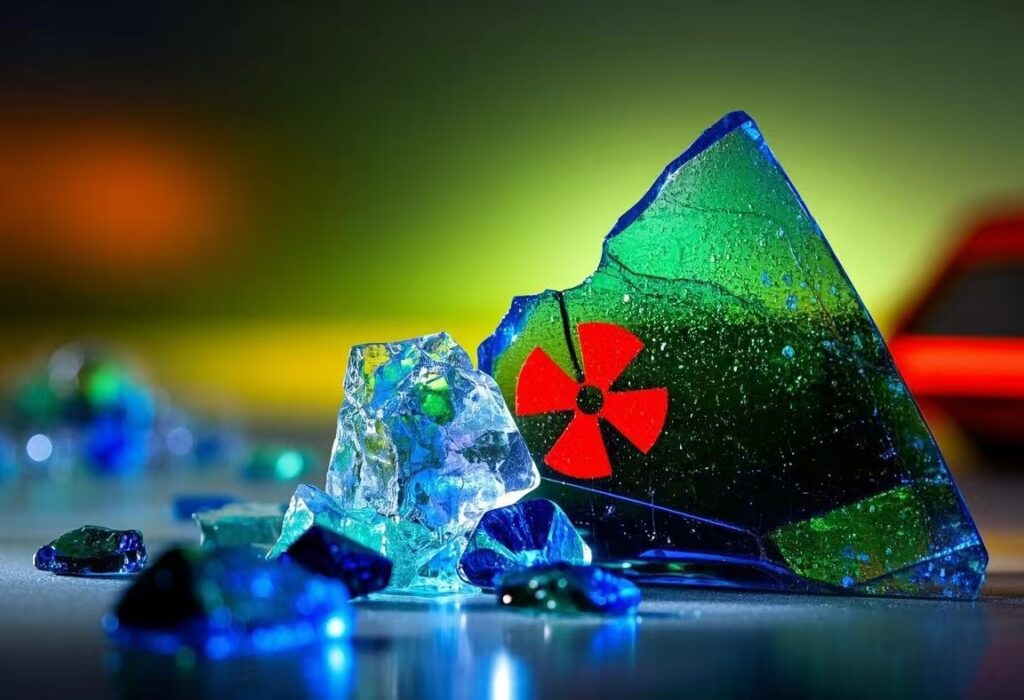
Unlike man-made glass, obsidian is a naturally occurring volcanic glass. It forms when lava cools rapidly without crystallizing, resulting in a smooth, dark, and often glossy appearance.
Where is it found?
- Ancient tools and arrowheads
- Jewelry and ornamental carvings
- Volcanic regions worldwide
7. Depression Glass
What makes it special?
Produced during the Great Depression (1920s–1940s), this mass-produced glassware was often cheaply made but came in bright colors like pink, green, blue, and yellow. It remains popular among antique collectors.
Where is it found?
- Vintage tableware
- Serving dishes and cups
- Antique stores and flea markets
Final Thoughts
While uranium glass may be the most famous glowing glass, there are many other types of unique and collectible glass with their own beauty and history. Whether you’re drawn to the deep blues of cobalt glass, the fiery tones of selenium glass, or the iridescent glow of carnival glass, there’s a world of fascinating glass to explore!