Introduction: A Master of Disguise
At first glance, you might mistake this creature for a tiny hummingbird—its rapid wingbeats, hovering flight, and long proboscis mimic the iconic bird perfectly. But the hummingbird moth (also called hawk moth or sphinx moth) is actually an extraordinary insect that captivates gardeners and scientists alike.
In this deep dive, we’ll explore:
✔ Identification tips (how to spot vs. real hummingbirds)
✔ Lifecycle & behavior (from caterpillar to aerial acrobat)
✔ Favorite plants to attract them to your garden
✔ Why they’re crucial pollinators
🔍 Identifying a Hummingbird Moth
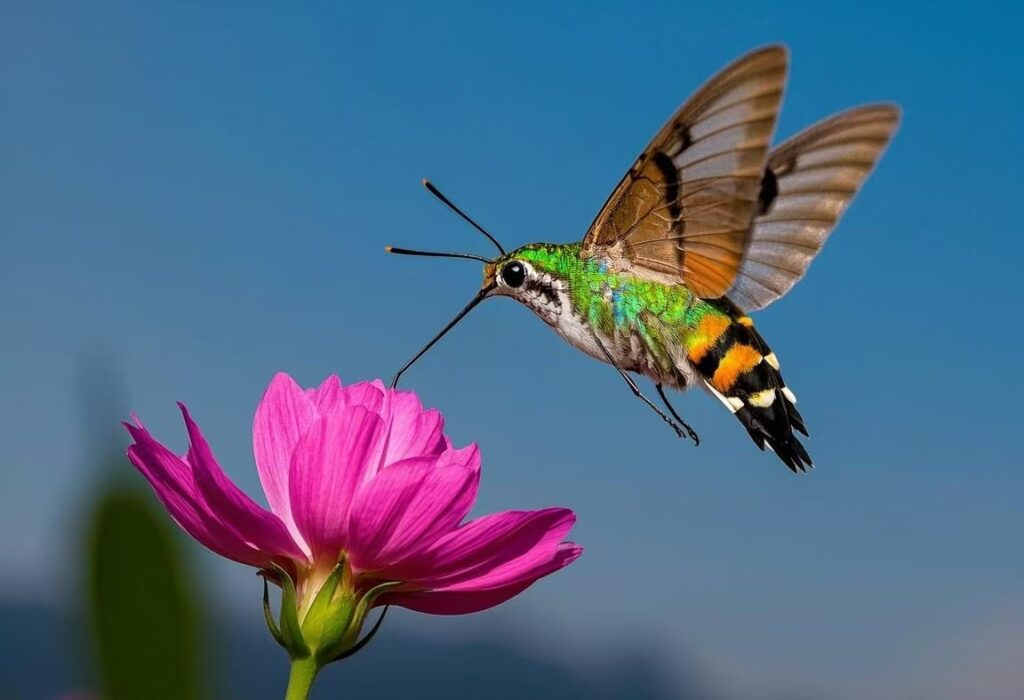
Key Features:
- Wings: Transparent with reddish-brown edges (beat 70x/second!)
- Size: 1-2 inches long, with a 2-4 inch wingspan
- “Tail”: Fan-like tuft resembling a hummingbird’s
- Flight Pattern: Hovers mid-air while feeding
🌱 Lifecycle & Behavior
1. Eggs & Caterpillars (“Hornworms”)
- Laid on host plants (e.g., honeysuckle, snowberry)
- Caterpillars are green with white stripes and a signature “horn” tail
- Often mistaken for tomato hornworms (but less destructive)
2. Pupation
- Spin cocoons in leaf litter or soil
- Overwinter as pupae in colder climates
3. Adult Stage
- Live 2-4 weeks as moths
- Feed on nectar via a 3-inch proboscis (like a built-in straw)
Note: Some species, like the Snowberry Clearwing, have mostly transparent wings.
🌸 Best Plants to Attract Them
Hummingbird moths prefer tubular flowers with abundant nectar:
Top 5 Choices:
- Bee balm (Monarda) – Their #1 favorite!
- Phlox – Especially fragrant varieties
- Butterfly bush (Buddleia) – A magnet for all pollinators
- Honeysuckle – Caterpillar host + nectar source
- Petunias – Night-blooming types work well
Pro Tip: Plant in clusters for easier feeding access.
🐝 Ecological Importance
- Pollination Powerhouses: Their long tongues reach deep into flowers that bees can’t access.
- Food Web Role: Caterpillars feed birds, while adults pollinate rare orchids.
- Climate Change Indicators: Early emergences signal shifting seasons.
📸 Where & When to Spot Them
- Locations: Gardens, meadows, and woodland edges (North America, Europe, Asia)
- Active Times: Early morning or dusk in summer months (June-August)
- Look For: Listen for a faint buzzing sound near flowers.
❓ FAQs About Hummingbird Moths
Q: Are they harmful to plants?
A: No! Unlike tomato hornworms, their caterpillars rarely damage crops.
Q: Do they bite or sting?
A: Completely harmless—no stingers or biting mouthparts.
Q: How can I photograph them?
A: Use a fast shutter speed (1/1000s+) and focus on brightly lit flowers.
Final Thoughts
The hummingbird moth is a testament to nature’s ingenuity—a flying paradox that blurs the line between bird and insect. By planting their favorite flowers, you can turn your garden into a stage for their mesmerizing aerial ballet.