Are you looking for a smarter way to grow more vegetables in limited space? Multilayer vegetable gardening might be the perfect solution! This innovative gardening technique allows you to cultivate multiple layers of plants vertically, boosting productivity while saving space. In this blog, we’ll explore how multilayer gardening works, its benefits, and tips to get started.
What Is Multilayer Vegetable Gardening?
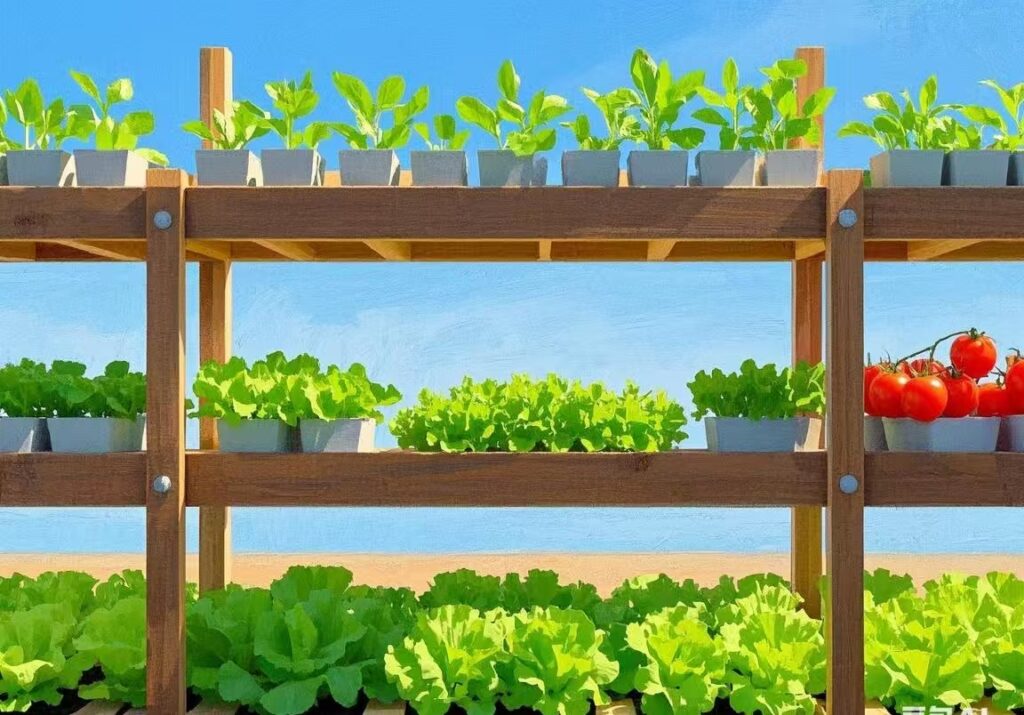
Multilayer gardening involves growing plants in stacked or tiered layers, mimicking natural forest ecosystems where different plants thrive at varying heights. This method is ideal for small gardens, urban spaces, or even balcony gardens.
Key Layers in a Multilayer Vegetable Garden:
- Tall Canopy Layer – Sun-loving plants like tomatoes, corn, or pole beans.
- Mid-Level Layer – Medium-height crops such as peppers, eggplants, or bush beans.
- Low-Growing Layer – Ground cover plants like lettuce, spinach, or herbs.
- Root Layer – Underground crops like carrots, radishes, or potatoes.
- Vertical Climbers – Vining plants (cucumbers, peas) grown on trellises or supports.
Advantages of Multilayer Vegetable Gardening
✅ Saves Space – Perfect for urban gardeners with limited yard space.
✅ Increases Yield – Grow more food in the same area by utilizing vertical space.
✅ Improves Soil Health – Diverse plant roots enhance soil structure and nutrient cycling.
✅ Natural Pest Control – Companion planting reduces pest issues.
✅ Efficient Water Use – Dense planting helps retain soil moisture.
How to Start a Multilayer Vegetable Garden
1. Plan Your Layout
- Choose a sunny spot (6+ hours of sunlight).
- Arrange plants by height, ensuring taller crops don’t shade smaller ones excessively.
2. Select Complementary Plants
- Use companion planting principles (e.g., grow basil with tomatoes).
- Avoid overcrowding to prevent disease.
3. Use Vertical Supports
- Install trellises, cages, or stakes for climbing plants.
- Try hanging planters or stacked pots for herbs and greens.
4. Maintain Proper Soil & Watering
- Use nutrient-rich, well-draining soil.
- Mulch to retain moisture and suppress weeds.
- Water deeply but less frequently to encourage strong roots.
Best Vegetables for Multilayer Gardening
- Tall Layer: Corn, sunflowers, okra
- Mid Layer: Peppers, broccoli, cauliflower
- Low Layer: Kale, Swiss chard, strawberries
- Root Layer: Beets, onions, garlic
- Climbers: Pole beans, peas, melons (with support)
Final Thoughts
Multilayer vegetable gardening is a smart, sustainable way to grow more food in less space while promoting biodiversity. Whether you have a small backyard or just a balcony, this method can help you maximize your harvest.