Growing carrots from transplants (instead of direct seeding) is less common but can give you a head start in cooler climates. However, carrots are sensitive to over-fertilization, so timing and nutrient balance are crucial. Here’s a step-by-step guide on when and how to fertilize carrot transplants for sweet, robust roots.
Best Time to Fertilize Carrot Transplants
1. Before Transplanting (Soil Prep)
- 2–3 weeks before planting, work well-aged compost or a balanced, low-nitrogen fertilizer (e.g., 5-10-10) into the soil.
- Avoid fresh manure—it causes forked, hairy roots.
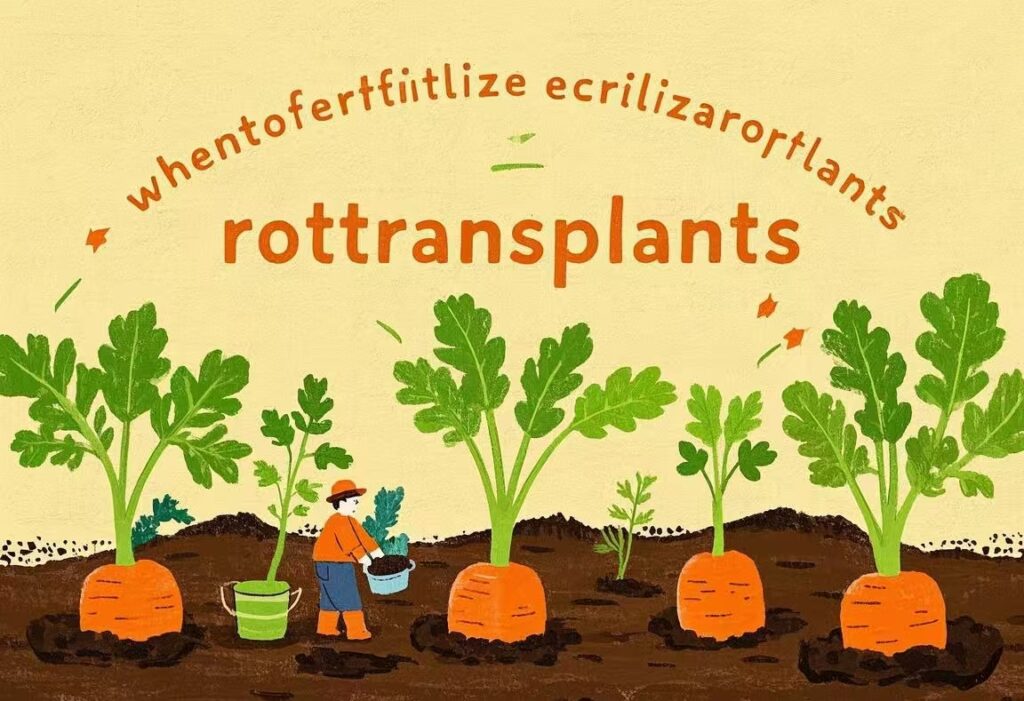
2. At Transplanting (Optional Light Feed)
- If your soil is poor, mix a weak liquid fertilizer (like fish emulsion or seaweed extract) into the planting hole.
- Skip this if you prepped the soil well.
3. Mid-Season (If Needed)
- Carrots need less nitrogen and more phosphorus/potassium for root development.
- 4–6 weeks after transplanting, side-dress with a low-N fertilizer (e.g., bone meal or 0-10-10) if growth seems stunted.
4. Stop Fertilizing 1 Month Before Harvest
- Over-fertilizing late in the season leads to bitter or split carrots.
What Type of Fertilizer to Use?
✔ Compost – Best for slow-release nutrients.
✔ 5-10-10 or 2-8-10 NPK – Promotes root growth over leafy tops.
✔ Liquid Kelp/Fish Emulsion – Gentle mid-season boost.
❌ High-Nitrogen Fertilizers (e.g., 10-10-10) – Causes excessive greens, small roots.
Pro Tips for Healthy Carrots
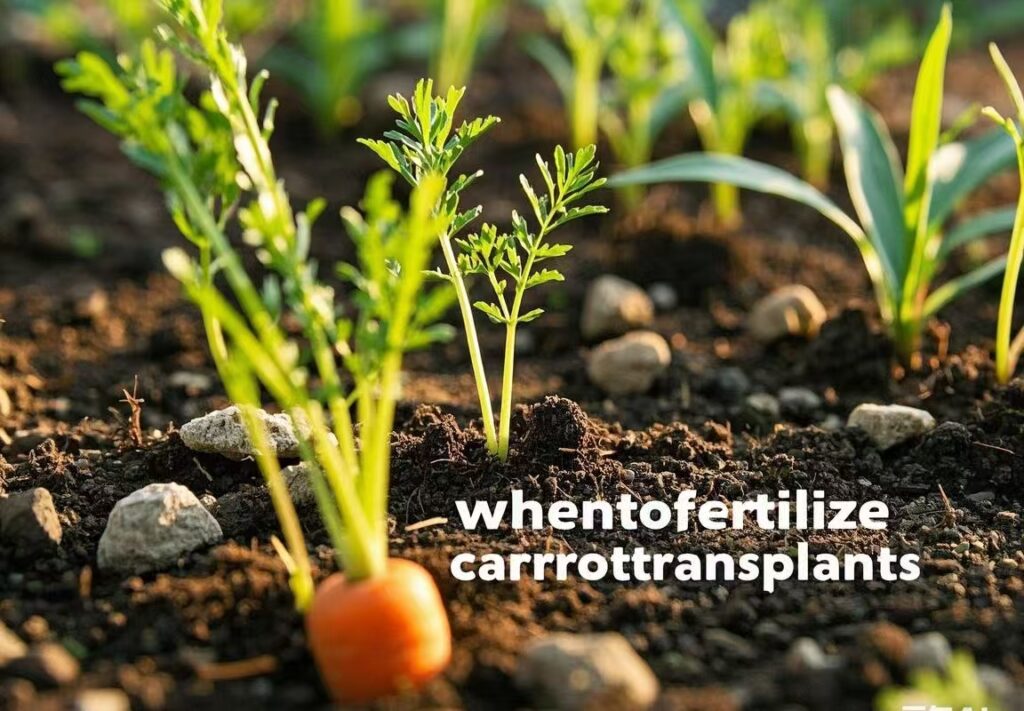
🌱 Loose, Sandy Soil – Prevents stunted/misshapen roots.
💧 Consistent Watering – Dry soil = tough carrots; soggy soil = rot.
🔍 Thin Seedlings Early – Crowding causes competition and small roots.
Signs Your Carrots Need Fertilizer
- Pale leaves (possible nitrogen deficiency).
- Slow growth (may need phosphorus/potassium).
- Weak stems (check soil nutrients).
Final Thoughts
Fertilize carrot transplants sparingly and strategically—focus on pre-planting soil prep and light mid-season feeding if needed. Overdoing it ruins flavor and texture!