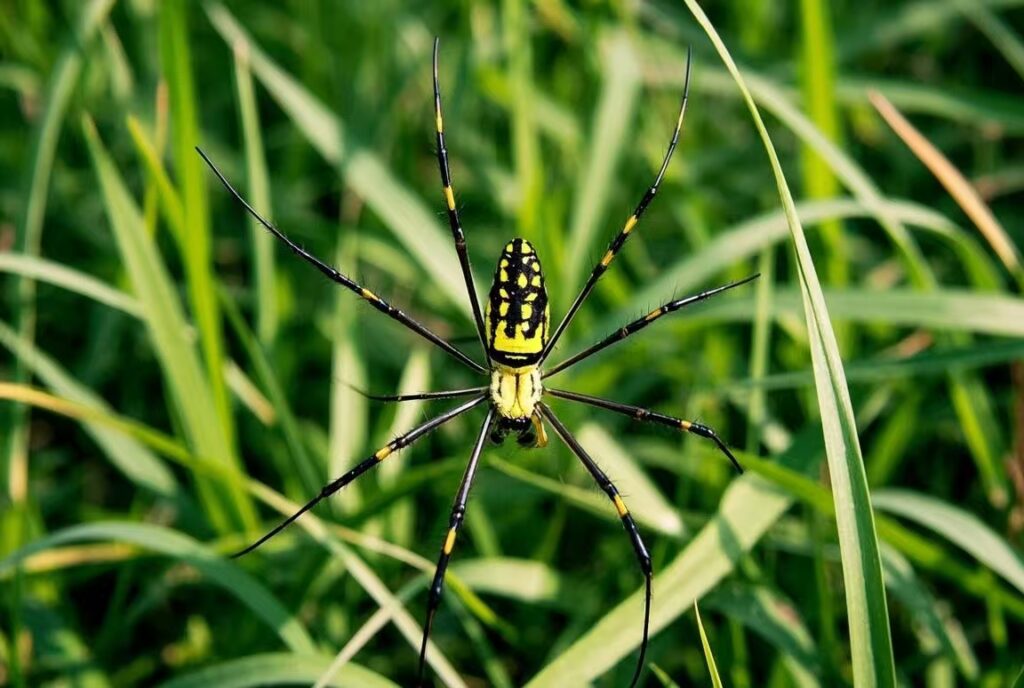
The yellow garden spider (Argiope aurantia), also known as the black and yellow garden spider or “writing spider,” is a striking and beneficial arachnid commonly found in gardens across North America. With its bold colors and intricate webs, this spider is both fascinating and harmless to humans.
Identification & Characteristics
✔ Bright yellow and black markings on a large, oval abdomen.
✔ Long, striped legs with a distinctive zig-zag web decoration (stabilimentum).
✔ Size: Females: 1–1.5 inches (males are much smaller).
✔ Web: Large, circular orb webs up to 2 feet wide.
Habitat & Behavior
- Location: Gardens, meadows, and sunny shrubbery (common in the U.S., Canada, and Mexico).
- Diet: Feeds on flies, grasshoppers, and other pests (great for natural pest control!).
- Lifespan: One season (females die after laying eggs in fall).
Is the Yellow Garden Spider Dangerous?
❌ Not aggressive – Bites are rare and only occur if threatened.
❌ Venom is mild – Comparable to a bee sting (harmless to most people).
Fun Facts
- The zig-zag web pattern may attract prey or deter birds.
- Females sometimes eat males after mating (sexual cannibalism).
- Their egg sacs contain hundreds of spiderlings, which hatch in spring.
How to Coexist with Garden Spiders

✅ Don’t destroy webs – They help control pests.
✅ Observe from a distance – They’re shy and fascinating to watch.
✅ Relocate if necessary – Use a jar and paper to move them safely.
Final Thoughts
The yellow garden spider is a beneficial, beautiful predator that adds intrigue to any garden. Instead of fearing them, appreciate their role in keeping insect populations in check!