China, the world’s largest agricultural producer, has embraced tier farming—a vertical and intensive farming method—to maximize land use, boost efficiency, and reduce environmental impact. From rooftop greenhouses to high-tech stacked aquaculture, China’s tiered farming systems are reshaping the future of food production. Here’s how it works and why it matters.
What is Tier Farming?
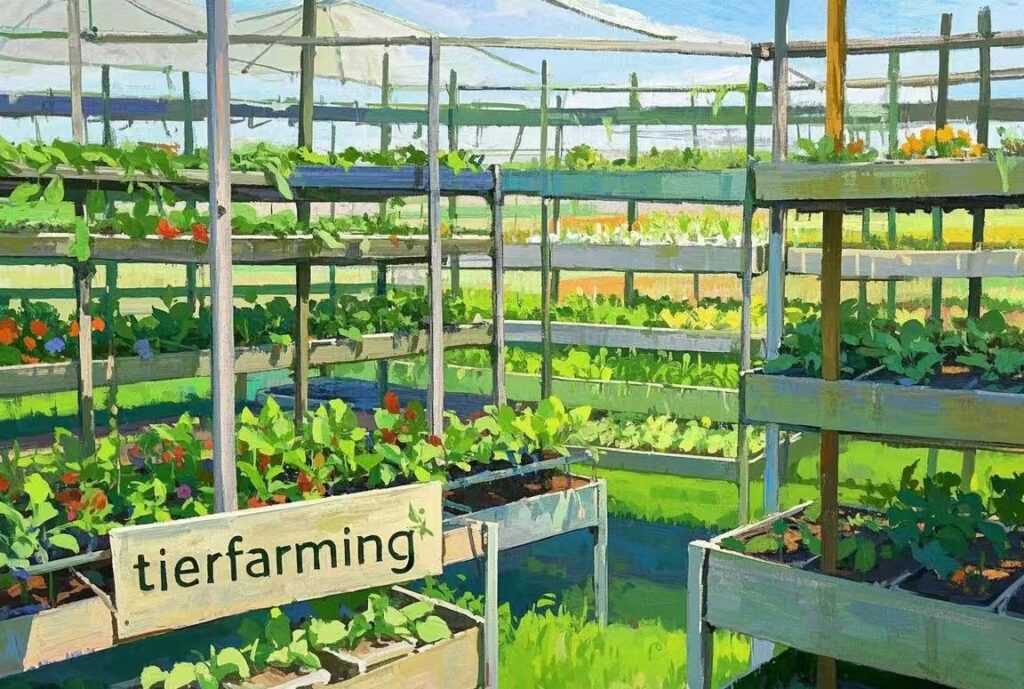
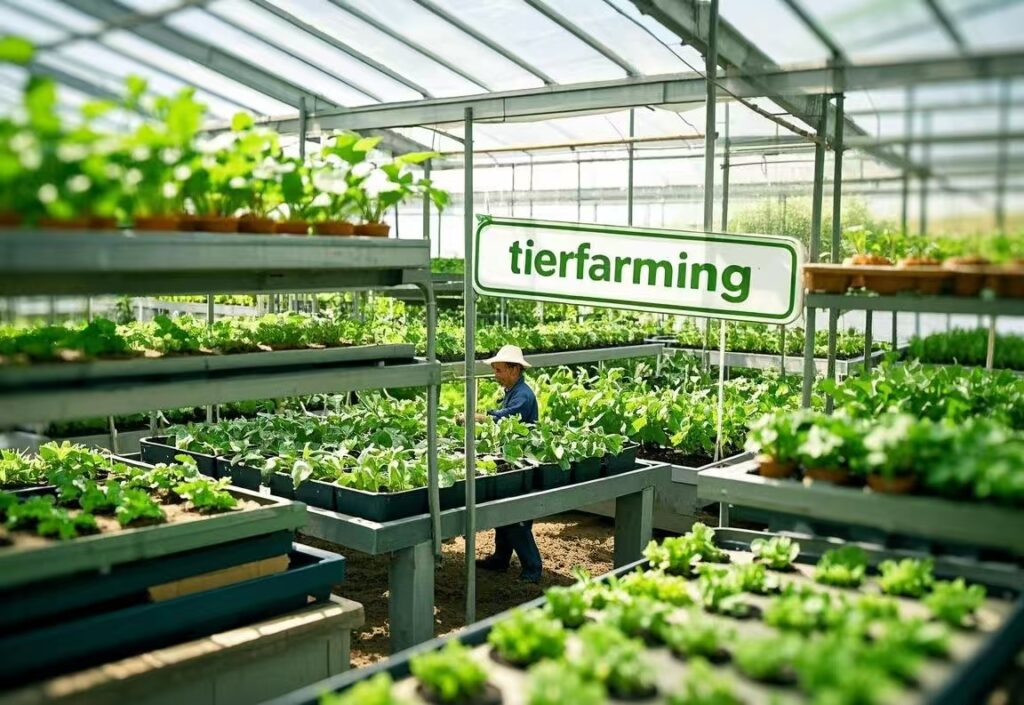
Tier farming (or vertical layered farming) involves growing crops or raising livestock in stacked layers, often indoors or in compact spaces. It includes:
- Vertical farms (hydroponics/aeroponics).
- Multi-level aquaculture (fish + plants in integrated systems).
- Rooftop and terrace gardens in urban areas.
Why China is Leading the Tier Farming Revolution
1. Land Scarcity & Urbanization
- With only 7% of the world’s arable land feeding 20% of the global population, China must optimize space.
- Cities like Shanghai and Beijing use rooftops and abandoned buildings for farming.
2. Government Support
- “Smart Agriculture” initiatives fund AI-driven vertical farms.
- Subsidies for eco-friendly practices (e.g., solar-powered greenhouses).
3. High-Tech Integration
- AI & IoT: Sensors monitor light, humidity, and nutrients.
- Robotic Harvesters reduce labor costs in mega-greenhouses.
Types of Tier Farming in China
1. Vertical Vegetable Farms
- Example: Alesca Life (Beijing) grows leafy greens in shipping containers.
- Output: 10x higher yield per square meter than traditional farms.
2. Rice-Fish-Duck Tier Systems
- A 2,000-year-old practice: Fish and ducks live in rice paddies, fertilizing crops naturally.
- Benefits: Less pesticides, extra protein source.
3. High-Rise Pig Farms
- Example: Guangdong’s 26-story hog tower houses 1.2 million pigs annually.
- Tech: Automated feeding, waste-to-energy systems.
4. Rooftop Solar Greenhouses
- Cities like Shenzhen grow tomatoes and strawberries atop skyscrapers.
Benefits of Tier Farming
✔ Saves Space: Ideal for dense urban areas.
✔ Cuts Water Use: Hydroponics uses 90% less water than soil farming.
✔ Reduces Pollution: Less transport = lower carbon emissions.
✔ Year-Round Harvests: Climate-controlled systems defy seasons.