When we think of spider webs, we often picture simple, sticky traps for catching prey. But some spiders take web-building to an artistic level, weaving ornamented webs that are as visually stunning as they are functional. From intricate patterns to shimmering silk decorations, these webs reveal nature’s genius in design.
In this blog, we’ll explore:
✔ Why spiders decorate their webs
✔ The most fascinating types of ornamented webs
✔ How scientists and artists draw inspiration from them
Why Do Spiders Ornament Their Webs?
Not all spiders add decorations, but those that do (like the Argiope genus) create striking, zigzag, spiral, or disc-shaped silk designs called stabilimenta. Scientists have several theories about their purpose:
1. Prey Attraction
- Some webs reflect UV light, luring insects like a visual trap.
- The shimmering silk may mimic flowers or dewdrops, tricking pollinators.
2. Predator Defense
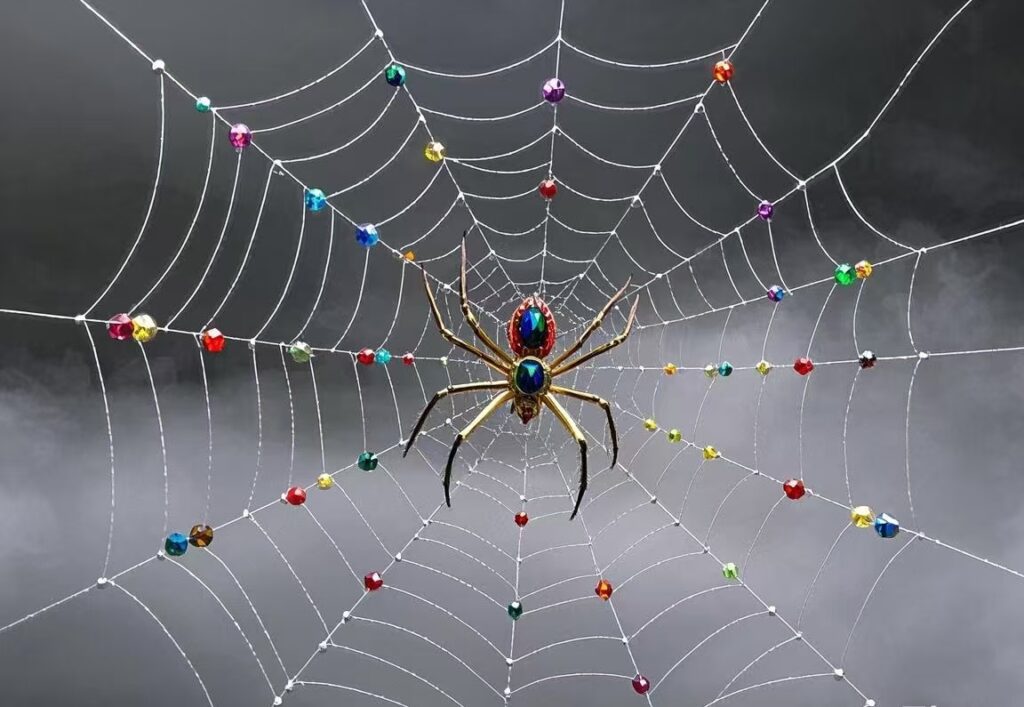
- The bold patterns make the web (and spider) look larger, scaring off birds or wasps.
- Some stabilimenta break up the spider’s outline, acting as camouflage.
3. Structural Reinforcement
- Extra silk may strengthen the web against wind or damage.
4. Mating Signals?
- Some researchers suggest males may judge female fitness by web decorations.
5 Most Spectacular Ornamented Webs in Nature
1. The St. Andrew’s Cross Spider (Argiope keyserlingi)
- Signature X-shaped stabilimentum in the center.
- Glows under UV light to attract moths.
2. The Silver Argiope (Argiope argentata)
- Creates thick, zigzag bands resembling writing.
- Common in tropical gardens.
3. The Feather-Legged Spider (Uloborus plumipes)
- Spins hackled orb webs with a feathery, wool-like texture.
- Uses no venom—its silk alone suffocates prey.
4. The Bowl and Doily Spider (Frontinella pyramitela)
- Weaves a 3D “bowl” above a flat, lacy “doily” web.
- Catches falling insects like a net.
5. The Tent-Web Spider (Cyrtophora citricola)
- Builds massive, tent-like colonial webs with multiple layers.
- Dozens of spiders cooperate in a single structure.
How Humans Are Inspired by Ornamented Webs
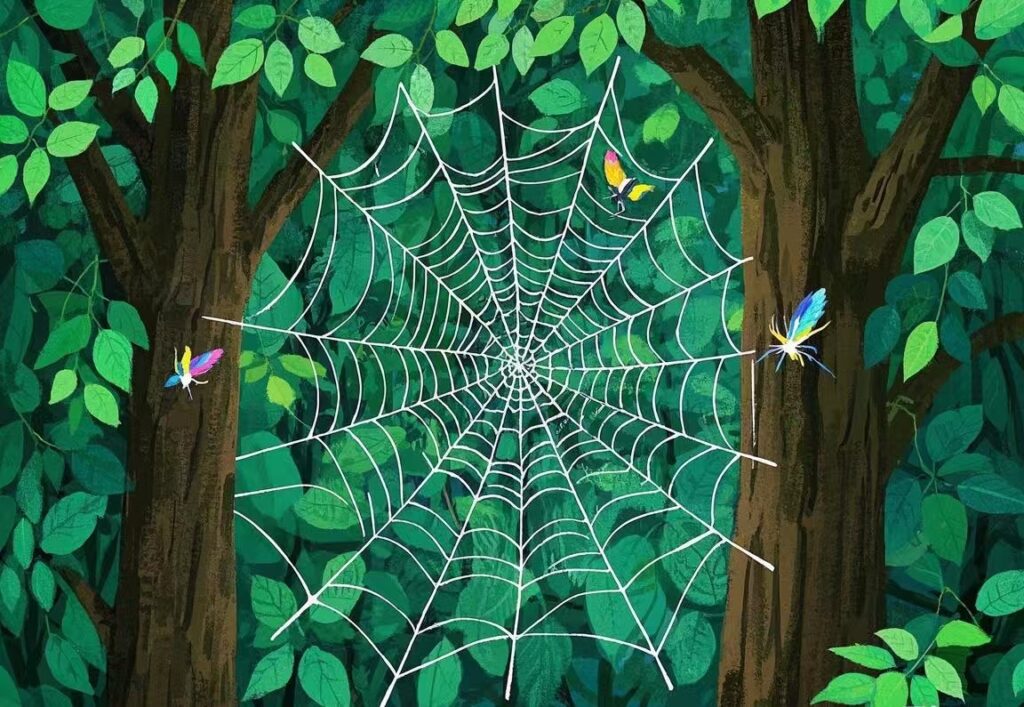
Biomimicry in Technology
- Scientists study spider silk for ultra-strong, lightweight materials (e.g., medical sutures, bulletproof fabrics).
- Web patterns inspire solar panel designs for better light absorption.
Art & Fashion
- Jewelry designers replicate web motifs in delicate silver and lace.
- Architects use web-like structures for lightweight, durable buildings.
Cultural Symbolism
- In folklore, webs represent fate, creativity, and interconnectedness.
- Native American traditions see the spider as a trickster and teacher.
How to Spot (and Respect) These Webs in the Wild
🔍 Look for them at dawn (when dew highlights the silk).
🌿 Check gardens, forests, and tall grass—many prefer sunny, open spaces.
🚫 Avoid touching—some spiders are shy, and webs take hours to build!