The compass rose is more than just a decorative element on maps—it’s a symbol of guidance, exploration, and the human desire to navigate the unknown. For centuries, this iconic design has helped travelers, sailors, and adventurers find their way across vast oceans and uncharted territories. In this blog, we’ll explore the history, significance, and enduring appeal of the compass rose.
What is a Compass Rose?
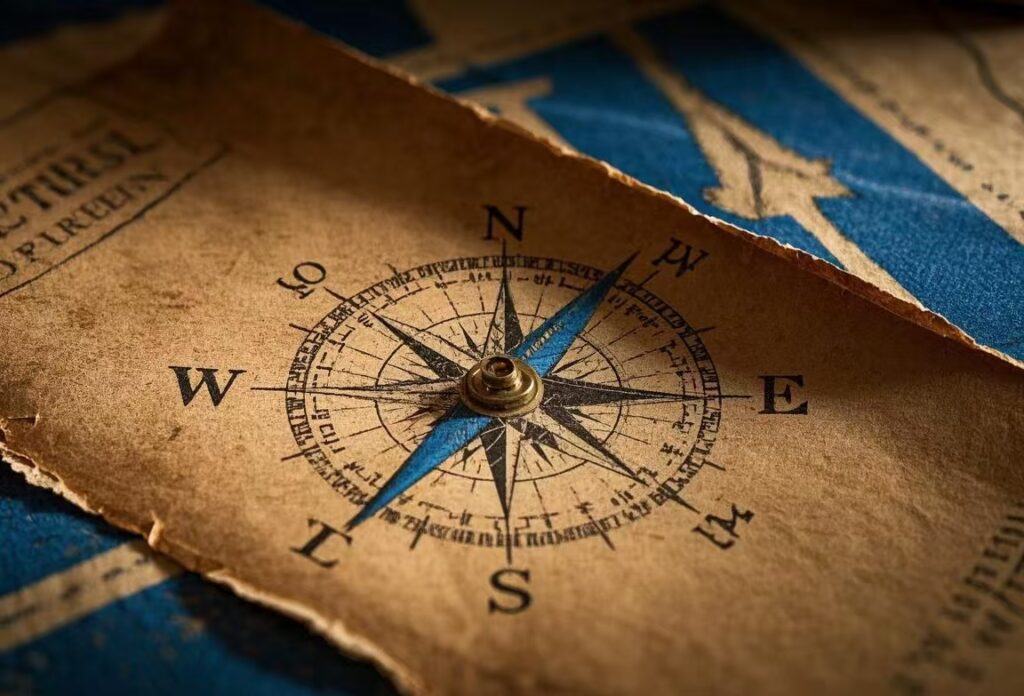
A compass rose is a figure displayed on maps, charts, and compasses to indicate the cardinal directions: North, South, East, and West. Often adorned with intricate designs, it serves as a visual guide for orientation. The term “rose” comes from the ornate, flower-like appearance of early compass roses, which were often embellished with artistic details.
A Brief History of the Compass Rose
The compass rose has its roots in the Age of Exploration, a time when sailors relied on magnetic compasses to navigate the seas. Here’s a quick timeline of its evolution:

- 13th Century: The first compass roses appeared on portolan charts, used by Mediterranean sailors. These early designs were simple, with just the four cardinal directions.
- 16th Century: As cartography advanced, compass roses became more elaborate, featuring 32 points to represent not only the cardinal directions but also intermediate ones like Northeast and Southwest.
- Modern Era: Today, the compass rose remains a staple on maps and nautical charts, though its design has become more standardized and functional.
The Symbolism of the Compass Rose
Beyond its practical use, the compass rose holds deep symbolic meaning:
- Guidance: It represents the idea of finding one’s way, both literally and metaphorically.
- Exploration: It embodies the spirit of adventure and the quest for discovery.
- Balance: The symmetry of the compass rose reflects harmony and order, reminding us of the interconnectedness of all directions.
The Compass Rose in Modern Culture
The compass rose continues to inspire artists, designers, and storytellers. Here are a few ways it appears in contemporary culture:
- Tattoos: Many people choose the compass rose as a tattoo to symbolize direction, purpose, or a love for travel.
- Logos: Companies and organizations use the compass rose in their branding to convey themes of guidance and exploration.
- Literature and Film: The compass rose often appears in stories about adventure and self-discovery, such as in pirate tales or coming-of-age narratives.
Fun Facts About the Compass Rose
- The oldest known compass rose dates back to the 13th century and was found on a map by Italian cartographer Pietro Vesconte.
- Some compass roses feature decorative elements like fleurs-de-lis, stars, or mythical creatures.
- The compass rose is sometimes called a “wind rose” because early designs included markings for wind directions.
How to Incorporate the Compass Rose into Your Life
- Home Decor: Add a compass rose-themed rug, wall art, or throw pillow to your living space for a touch of nautical charm.
- Jewelry: Wear a compass rose pendant or bracelet as a reminder to stay true to your path.
- Travel Inspiration: Use the compass rose as a motif in your travel journal or scrapbook to document your adventures.
Conclusion
The compass rose is more than just a navigational tool—it’s a timeless symbol of direction, discovery, and the human spirit. Whether you’re a traveler, a dreamer, or simply someone seeking inspiration, the compass rose reminds us that every journey begins with a single step in the right direction.
What does the compass rose mean to you? Share your thoughts in the comments below!